



Bring up “casino tournament” and the majority picture poker tables, tense faces, stacks of chips. That image is stale. Today’s tournaments at places like casino spinobon games are rapid, built around slots, live dealer games, even crash-style titles. They’re considerably more accessible and mechanically interesting than newcomers anticipate.
These events aren’t reserved for high rollers or card sharks. They run on structured leaderboards, fixed prize pools, and transparent scoring that rewards consistency as much as luck. Once you understand how they work, a casual session becomes a strategic pursuit. Every spin has two purposes: personal entertainment and tournament progression.
How Casino Platforms Design Tournament Ecosystems
Tournament options at reputable platforms like Spinobon Casino don’t operate as isolated promotions. They’re interconnected ecosystems created to drive engagement across multiple sessions. Daily tournaments lead to weekly championships, which qualify players for monthly majors with substantially larger prize pools. This ladder structure builds persistent goals that go beyond single-session satisfaction.
Game weighting within tournaments reflects operator partnerships and player preference data. Newly released slots often receive featured tournament billing to boost trial and awareness. This helps players who respond quickly to unfamiliar game mechanics, as competition in new-game tournaments is likely to be softer than events showcasing established titles where optimal strategies are widely known.
Loyalty program integration boosts tournament value for regular participants. Points collected through tournament play often contribute to VIP progression at accelerated rates compared to standard wagering. This dual-reward structure guarantees tournament participation advances multiple objectives at once: prize pool earnings, leaderboard prestige, and loyalty tier advancement toward better perks and withdrawal privileges.
Transparency regarding tournament terms differs significantly across operators. Reputable platforms openly display prize distribution tables, tiebreaker rules, and technical provisions for disconnections before registration completes. Players should review these documents before paying entry fees, as unfavorable tiebreaker mechanics can hurt particular playstyles. Knowledge of the complete rule set is a competitive edge that requires nothing to acquire.
The Behavioral Dynamics of Competitive Leaderboards
Tournament leaderboards activate specific cognitive responses that typical casino play cannot reach. The displayed ranking structure converts abstract wins and losses into relative performance metrics. A losing session that nevertheless improves your leaderboard position feels distinctly different from a losing streak in isolation. This reframing mechanism clarifies why tournament players often report elevated satisfaction levels than those engaging in similar games outside competitive structures.
Near-miss phenomena work differently in tournament contexts. In standard play, a near-miss on a jackpot provokes frustration as the outcome is binary. In tournament play, the same near-miss produced points that advanced the player past three opponents. The competitive frame converts what would be disappointment into tangible progress. This psychological shift keeps up motivation amid inevitable downswings.
Time pressure introduces flow states that boost immersion. The countdown clock erases the relaxed pacing of casual play, necessitating continuous engagement. Players report becoming unaware of their surroundings as they maximize every second toward leaderboard advancement. This deep focus state, prized across all gaming genres, arises naturally from tournament structures without needing complex game mechanics.
Social comparison fuels behavior more strongly than absolute outcomes. Watching a familiar username rise the rankings activates competitive instincts that unidentified casino games are unable to activate. Some platforms allow limited chat functions during tournaments, adding direct interaction to the competitive mix. This social layer converts alone screen time into a community experience without losing the convenience of remote play.
Typical Tournament Types and Their Gameplan Differences
The term “casino tournament” includes several separate formats that demand different approaches. Scheduled tournaments run on fixed timetables, beginning and ending at predetermined times without regard to participant count. Sit-and-go variants begin as soon as a minimum number of players enroll, offering flexibility at the cost of unknown competition levels. Comprehending which format fits your preferences prevents mismatched expectations.
Survivor tournaments present elimination mechanics missing from standard leaderboard events. At designated intervals, the lowest-ranked participants are taken out from contention, and their accumulated points evaporate. This format heightens pressure as cutoff times approach, pushing marginal players into aggressive strategies to escape elimination. The psychological weight of watching the cutoff line move toward your position generates uniquely compelling drama.
Reloader tournaments permit multiple entries with cumulative scoring across attempts. A player might complete three separate sessions, with only their highest score qualifying toward final rankings. This format prefers volume and persistence, allowing participants to get past unlucky sessions through repetition. The strategic calculation entails figuring out how many entries warrant the total https://www.cbc.ca/news/entertainment/francine-pascal-obit-1.7279880 cost relative to prize pool expectations.
Freeroll tournaments impose no entry fee while offering real prizes, functioning primarily as acquisition and retention tools. These events draw large fields, diluting individual win probability but offering risk-free exposure to tournament mechanics. Experienced players employ freerolls as low-stakes laboratories for trying aggressive strategies they might be reluctant to deploy when real money hinges on every decision.
- Scheduled tournaments: Set start and end times, steady planning, often greater guaranteed prize pools
- Sit-and-go tournaments: Start when minimum players enroll, adaptable timing, varying competition levels
- Survivor tournaments: Recurring elimination of lowest-ranked players, escalating pressure, assertive strategy required near cutoff points
- Reloader tournaments: Multiple entries permitted, best score counts, favors persistence and bankroll allocation strategy
- Freeroll tournaments: No entry cost, real prizes, large fields, great for learning tournament mechanics without risk
The way Casino Tournament Mechanics Really Work
Each tournament begins with a specific set of rules: scoring, duration, the games qualify. In standard play, solely the direct win matters. Tournament scoring assigns points based on defined criteria. The most common model awards points for every unit you wager, transforming bet size into leaderboard ranking. So a player wagering modestly but consistently can outrank someone who puts in sporadic large bets.
Time constraints create the competitive pressure. A typical slot tournament may go for two hours. Participants need to balance speed against bankroll management. The software tracks every qualifying spin in real time, refreshing leaderboard positions instantly. That transparency erases any suspicion of manipulated results. Players view exactly where they stand and can adjust their pace before the clock runs out.
Prize distribution adheres to predetermined structures, not winner-takes-all brutality. The top fifty or one hundred positions often get rewards. The biggest prizes are at the top, but meaningful consolation prizes cascade downward. This tiered approach keeps participants engaged even when first place drifts out of reach. A player sitting in forty-fifth place with fifteen minutes left still has a real incentive to hold their spot.
Rebuy options introduce another strategic layer. Many tournaments permit you acquire additional attempts when your initial balance runs out. Each rebuy resets your score to zero. You must calculate: is there enough time left to reconstruct a competitive tally? The math behind that choice distinguishes casual players from those who treat tournaments as serious investments.
What to Check Before Signing Up for Any Online Casino Tournament
Tournament terms hold details that significantly affect profitability and experience quality. Wagering requirements attached to prize money are the most critical variable. A tournament promoting substantial prizes becomes less attractive if those prizes carry playthrough obligations that make withdrawal unlikely. Players should ascertain whether prizes credit as cash or bonus funds before celebrating leaderboard positions.
Eligibility restrictions sometimes exclude players from specific jurisdictions or those using certain payment methods. A player might climb to a prize position only to discover their deposit method disqualified them from receiving rewards. Checking eligibility terms before committing time and money prevents this devastating scenario. Reputable platforms make these restrictions clear during registration, not hidden in fine print.
Technical requirements deserve attention, particularly for live dealer tournaments where streaming quality affects decision-making. Minimum connection speeds, compatible browsers, and device specifications all influence the competitive experience. Players trying tournaments on inadequate hardware face disadvantages unrelated to skill or luck. Confirming technical compatibility before tournament start time avoids frustration and wasted entry fees.
Payout processing periods and methods for tournament winnings should match player expectations. Some platforms manage tournament prizes through the same channels as standard withdrawals, while others set different timelines. Being aware of when prize money will become available for withdrawal or reinvestment enables proper bankroll planning across multiple tournament cycles. This practical consideration influences real-world value more than prize pool headlines suggest.
Slot Tournaments Versus Real-Time Casino Tournaments
The big divide in tournament offerings divides automated slot competitions from live dealer events. Each format necessitates a different skill set and psychological approach. Slot tournaments prize raw volume and speed. Live tournaments introduce decision-making under time pressure. Understanding this distinction keeps players from applying wrong strategies to incompatible formats.
The Slot Contest Experience
Slot tournaments remove the solitary nature of standard slot play and introduce direct competition. Everyone gets the same starting balance and engages in the same designated game. The software sets certain variables, like bet level, to establish a level playing field. Victory depends on maximizing spin frequency within the allotted time, while anticipating variance brings favorable sequences.
The game chosen significantly affects outcomes. High-volatility slots create erratic leaderboard movement; positions move violently as big wins arrive. Low-volatility games generate tighter clusters, where consistent point accumulation matters more than single massive hits. Experienced tournament players study the featured game’s mathematical profile before settling on a strategy.
Mobile Tournament Gaming and Technical Factors
The shift toward mobile gaming has altered tournament accessibility, but it introduces technical variables that affect competitive performance. Connection stability turns into paramount when every second of tournament time holds scoring potential. A dropped connection during a live dealer tournament hand can force fold decisions that ruin leaderboard positions. Players dedicated about tournament competition must assess their mobile setup honestly.
Spinobon Casino’s platform optimizes tournament interfaces for smaller screens without compromising the information density competitive play demands. Leaderboard positions, remaining time, and current score display simultaneously without demanding screen switching. This design consideration counts enormously during the frantic final minutes when every glance away from the game loses potential points.
Touch screen input speed differs measurably from mouse and keyboard alternatives. Mobile players might execute fewer spins per minute than desktop competitors in slot tournaments, producing an inherent disadvantage in volume-based scoring systems. Awareness of this limitation enables mobile players to adjust through game selection, favoring tournaments where strategic decisions weigh more than raw action frequency.
Battery life and notification management are overlooked competitive factors. A low battery warning appearing during a crucial tournament sequence disturbs focus at the worst possible moment. Disabling non-essential notifications before tournament sessions and ensuring adequate charge eliminates preventable disadvantages. These mundane preparations separate players who treat tournaments seriously from those who approach them casually.
The Live Casino Competition Structure
Automatic spin features transforms into a competitive advantage. Hand-operated spins creates micro-delays that build up over thousands of rounds. Participants who master the pace of pausing reels immediately after results display gain a marginal but meaningful edge. This operational enhancement, alongside unwavering focus, differentiates podium finishers from the middle of the pack.
The Live Casino Tournament Format
Live croupier competitions usually focus on roulette or blackjack. Dealer interaction and live strategic decisions substitute for machine-driven spins. These events feel more like traditional casino competition because personal factors impact outcomes. A blackjack contest might require players to grow a starting stack within a fixed number of hands, with scoreboard positions determined by ending chip totals.
Strategic intricacy expands significantly in live formats. Stake levels relative to competitors’ situations turns crucial. A participant chasing the top spot shouldn’t merely play cautiously; they have to recognize moments to diverge from standard tactics and pursue bigger fluctuations. This generates fascinating game theory scenarios where best strategy depends on ranking situation, not static house edge calculations.
The social dimension amplifies the overall experience considerably. Viewing opponents’ hands conclude via HD stream, noting their bet placements in real time, and sensing the shared suspense as a dealer shows a crucial card converts the tournament from abstract competition into visceral entertainment. Spinobon Casino’s live tournament interface displays opponent chip counts prominently, allowing constant strategic recalibration.
Prize Structures That Recognize More Than First Place
The romanticized image of tournament victory centers exclusively on the champion, but modern prize distribution mirrors a more nuanced understanding of player psychology. Guaranteed prize pools with deep payout structures guarantee that reaching the final stages offers tangible value regardless of your final position. This design philosophy recognizes that sustained engagement demands hope allocated across the entire participant field.
Typical distributions apportion roughly thirty percent of the prize pool to the top three finishers, with the remainder cascading through positions that might reach to one hundredth place. A tournament with a substantial guaranteed pool might grant the winner a significant sum while distributing smaller but meaningful amounts to dozens of participants. This structure transforms a tournament entry from a lottery ticket into a calculated investment with multiple profitable outcomes.
Non-cash prizes show up frequently as complementary rewards. Free spins packages, bonus credits with reduced wagering requirements, and physical merchandise generate additional incentive layers. These alternative prizes often include lower effective costs for the operator while supplying real value to recipients. A player who finishes fifteenth might obtain a free spins bundle worth more than the cash prize at twentieth position.
Satellite qualification paths multiply accessibility. Instead of buying directly into high-stakes tournaments, players can join lower-cost qualifiers that grant seats to bigger events. This pyramid structure lets participants with modest bankrolls play in premium tournaments they could never justify entering directly. The psychological journey from satellite qualifier to main event finalist is one of online casino gaming’s most compelling narratives.
Bankroll Administration Specifically for Tournament Participants
Handling tournament funds varies significantly from regular casino budgeting because the fee structure combines entry fees with potential rebuys. A player allocating funds solely for tournament play must factor in total session cost, not per-spin expenditure. This differentiation surprises many newcomers off guard when they use up their budget on entry fees alone, leaving nothing for the rebuy that could recover a competitive position.
The suggested strategy splits tournament bankroll into entry fee allocation and rebuy reserve. If a tournament requires a certain amount to enter and enables two rebuys, the true maximum cost triples. Careful players compute this worst-case scenario before committing and never register for tournaments where the total potential cost goes beyond their predetermined session limit. This discipline avoids the emotional decision-making that tournament pressure inevitably encourages.
Expected value calculations become more complex in tournament settings because prize distribution curves impact profitability differently than flat payout structures. A tournament with a large guaranteed prize pool and comparatively small field might offer positive expectation even for average players. On the other hand, events with top-heavy payouts demand exceptional performance to justify entry costs. Learning to assess these distributions quickly separates sustainable tournament participation from costly entertainment spending.
Tracking results systematically exposes patterns undetectable to casual observation. A player might discover they perform significantly better in morning tournaments than evening events, or that certain game types consistently produce higher finishes. This data allows informed decisions about which tournaments merit bankroll allocation. Without tracking, players rely on selective memory that emphasizes memorable victories while forgetting the grinding losses between them.
Differentiating Tournament Skill from Outright Gambling
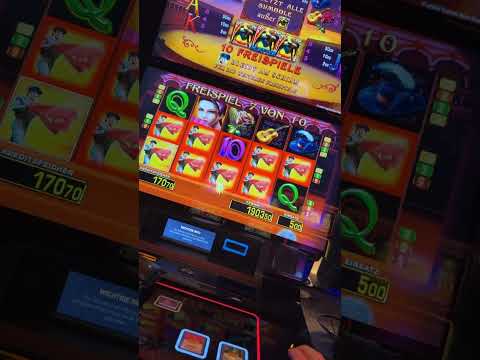
The enduring debate about whether tournament success reflects skill or luck ignores the complex reality that both forces operate at once, but at varying magnitudes depending on format. Slot tournaments tilt heavily toward variance in short sessions, but over hundreds of tournaments, the players who optimize spin speed, rebuy timing, and game selection surpass those who view each event as pure chance.
Live dealer tournaments introduce real decision points that amplify skill differentials. Blackjack tournament strategy diverges from basic strategy when opponent chip counts shape optimal play. A player facing elimination might appropriately double down on hands that basic strategy would never warrant, because the tournament context alters the expected value calculation. Mastering these situational adjustments requires study that casual participants infrequently undertake.
Game selection itself is a skill that tournament players cultivate over time. Identifying which tournaments offer favorable prize-to-field-size ratios, which formats match personal strengths, and which time slots draw softer competition all constitute learnable advantages. These meta-skills function outside the games themselves but directly impact long-term profitability more than any in-game tactic.

The most successful tournament players treat their activity as a discipline needing preparation, review, and continuous adjustment. They maintain records, analyze losing sessions for correctable errors, and approach each event with specific goals beyond just hoping for good fortune. This mindset shift from passive participant to active competitor is the actual truth behind sustainable tournament success.
